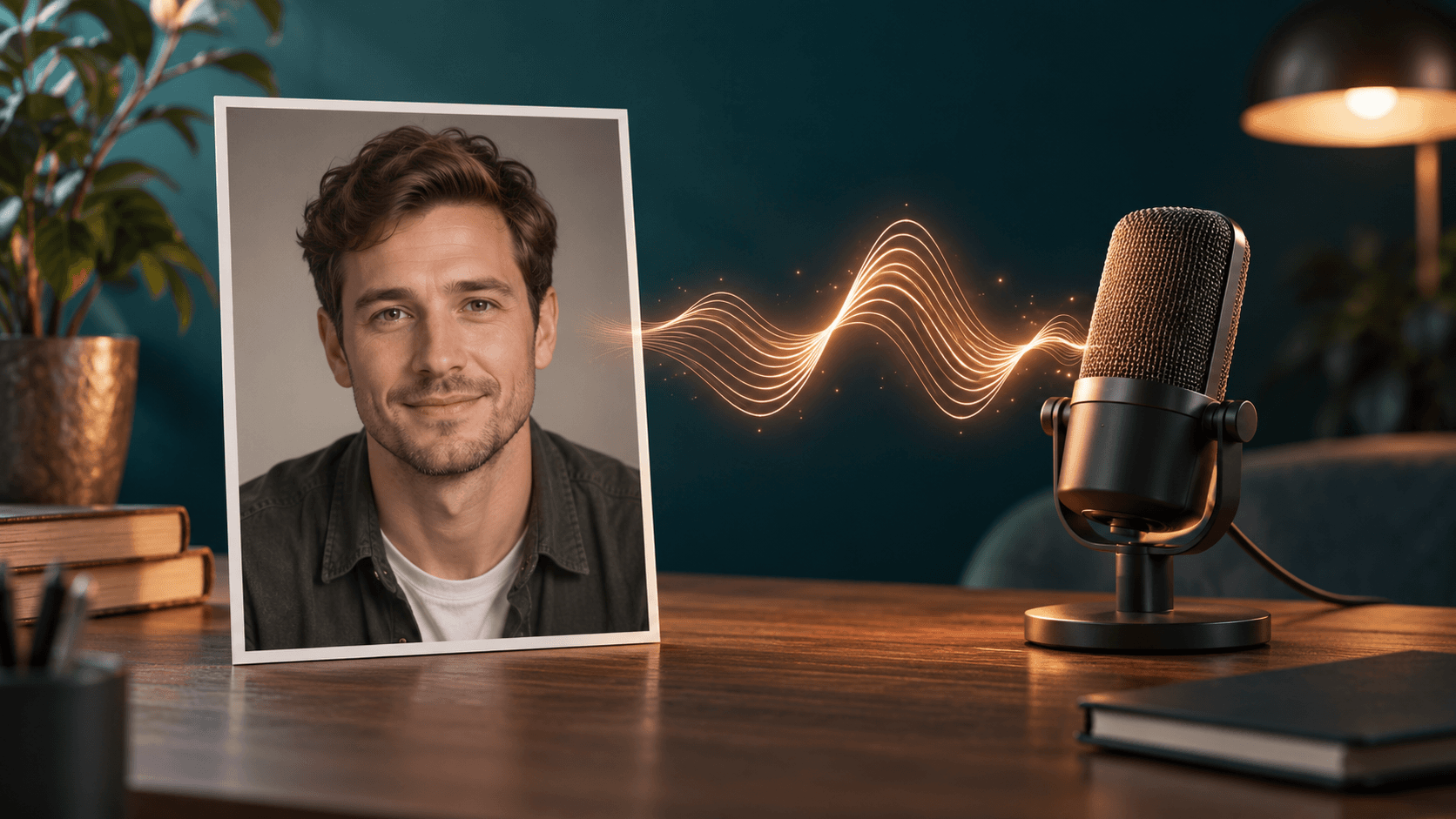
Talking Photo Tutorial: A Portrait and Recording in GenX
Prepare a portrait and audio, generate an OmniHuman talking video, and review lip movement, appearance and credit use before publishing.
Start with a portrait and recording
The GenX talking-photo tool takes a still portrait and an audio recording. OmniHuman 1.5 uses that recording to drive facial and body movement. Choose this route for a person delivering an existing narration.
Use a clear portrait with one visible face, even light and little obstruction around the mouth. Obtain permission for the intended use of both the image and the recording. Check the upload controls for current file requirements.
Generate a short first version
Open the talking-photo creator. Upload your portrait and add the recording. If you only have text, prepare narration separately with text-to-speech, download it, and upload that audio to the portrait tool.
Give a short presentation instruction, such as “A calm presenter facing the camera, with restrained gestures.” The audio supplies the words; the prompt provides presentation guidance. Review the model-compatible settings and current credit estimate before submitting.
Keep the task link while generation runs. If you refresh, the creator can recover the task's stored status and result. Starting another generation creates another request and uses credits again.
Review the finished video
Watch the whole clip with sound. Check the first syllables, pauses and final words for timing. Look for changes to facial proportions, hair, shoulders and clothing. Review any hand gestures independently of the face.
If the result is unstable, simplify the portrait or use a cleaner recording for your next attempt. Save a usable version before experimenting further. Generated motion varies with the inputs; this workflow does not guarantee exact likeness or perfect lip sync.
Credits and privacy
Each generation uses the existing credit system. The form's current estimate takes precedence over old examples of fixed prices. GenX preserves task ownership and private-output settings in the application. Generation uses the configured provider; it does not happen on your device.
Read the talking-photo workflow comparison if you also need script editing, a reusable avatar, or another voice workflow.
FAQ
Do I need a reference video?
No. This GenX route takes a portrait image and an audio file. For scene animation, use image-to-video.
Does the tool translate the recording?
No. Supply a recording in the language you want the portrait to speak.
Can I change the message after generation?
Prepare a new recording and generate another version. Inspect the new result before publishing it, and make the synthetic nature of the portrait clear where appropriate.
مقالات أخرى

Image to Video Tutorial
Step-by-step guide to transforming your images into stunning AI-generated artistic videos.

مطالبات Sora 2: قوالب اللقطات وسير عمل مراجعة أفضل
اكتب مطالبات Sora 2 أوضح مع أمثلة للقطات الأصلية، وإشارات الكاميرا والحركة، وطريقة عملية لمراجعة النتائج دون إهدار الرصيد.

Creative Tips & Best Practices
Expert tips and best practices to get the most out of GenX and create stunning AI-generated videos.
النشرة الإخبارية
انضم للمجتمع
اشترك في نشرتنا الإخبارية لآخر الأخبار